
L.01
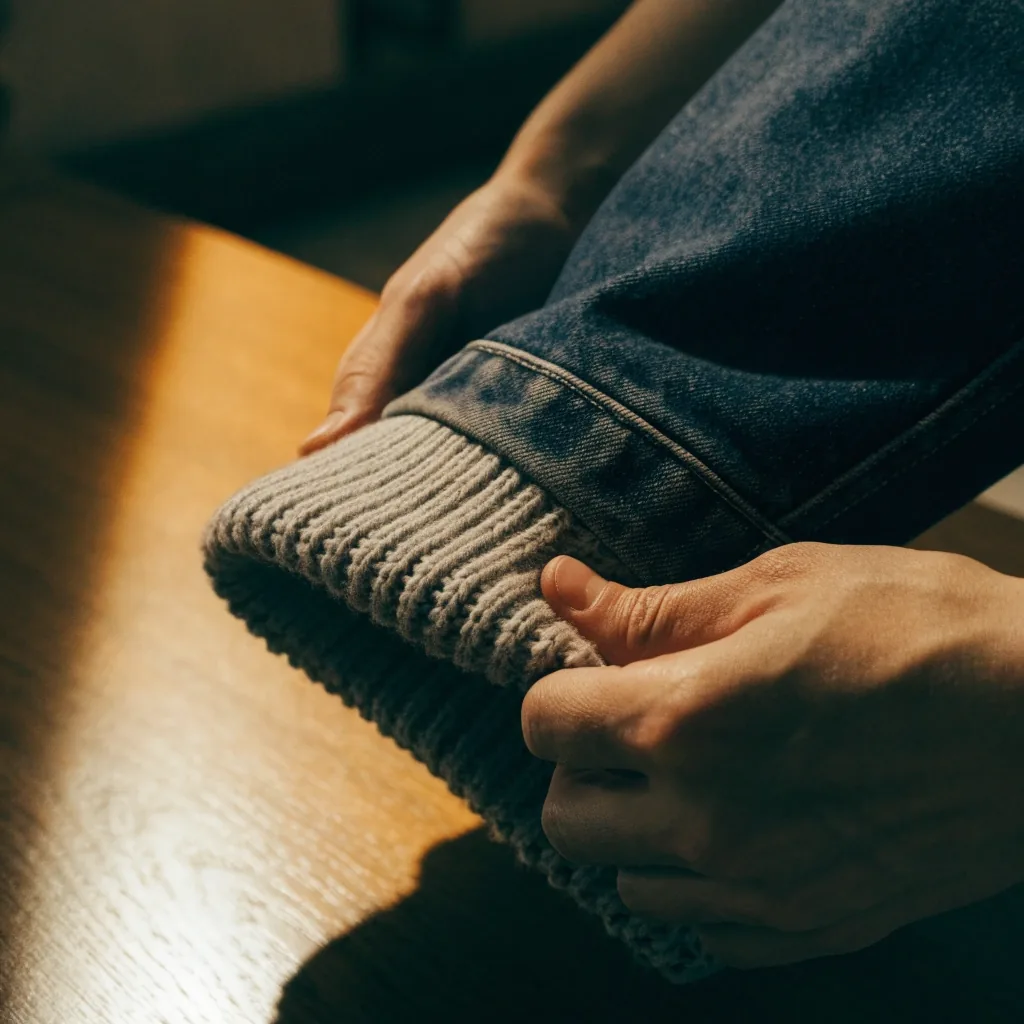
Two garments can look the same on a hanger and behave nothing alike after a year of wear. Fabric and construction decide that, not the label.
How fabric and fit change what you wear
Two garments can look the same on a hanger and behave nothing alike after a year of wear. The difference is usually fabric and construction, not brand or price. This guide explains the terms you'll find on a label, what they mean in practice, and how to judge a piece before you commit to it.
Why fiber content comes first
Fiber is the single most predictive thing on a label. Cotton, wool, linen, and synthetics each behave in consistent ways, and a blend behaves like a weighted average of its parts.
A shirt that's mostly cotton with a little elastane will hold its shape better than one that's mostly polyester, though the polyester will resist wrinkling. Neither is automatically better. The point is to know what you're getting before you find out through wear.
Holds shape
Cotton, wool, and denser blends
Resists creasing
Polyester and nylon blends
Breathes and dries
Linen, and wool in most weather
L.01–04
Cotton, wool, and denim each behave differently
The three fibers most American wardrobes lean on have their own habits. Read them side by side and you can guess how a piece will look after a season of wear.
Cotton and its variations
Cotton is the default American fabric, and the word covers a wide range. Long-staple cotton produces a smoother, stronger yarn than shorter staples, which is why some cotton shirts feel markedly different from others at the same price. Weight matters too: a heavier cotton t-shirt drapes and holds a line, while a thin one clings and stretches. If a label mentions the cotton type or the fabric weight, that's usually a sign the brand expects you to care.
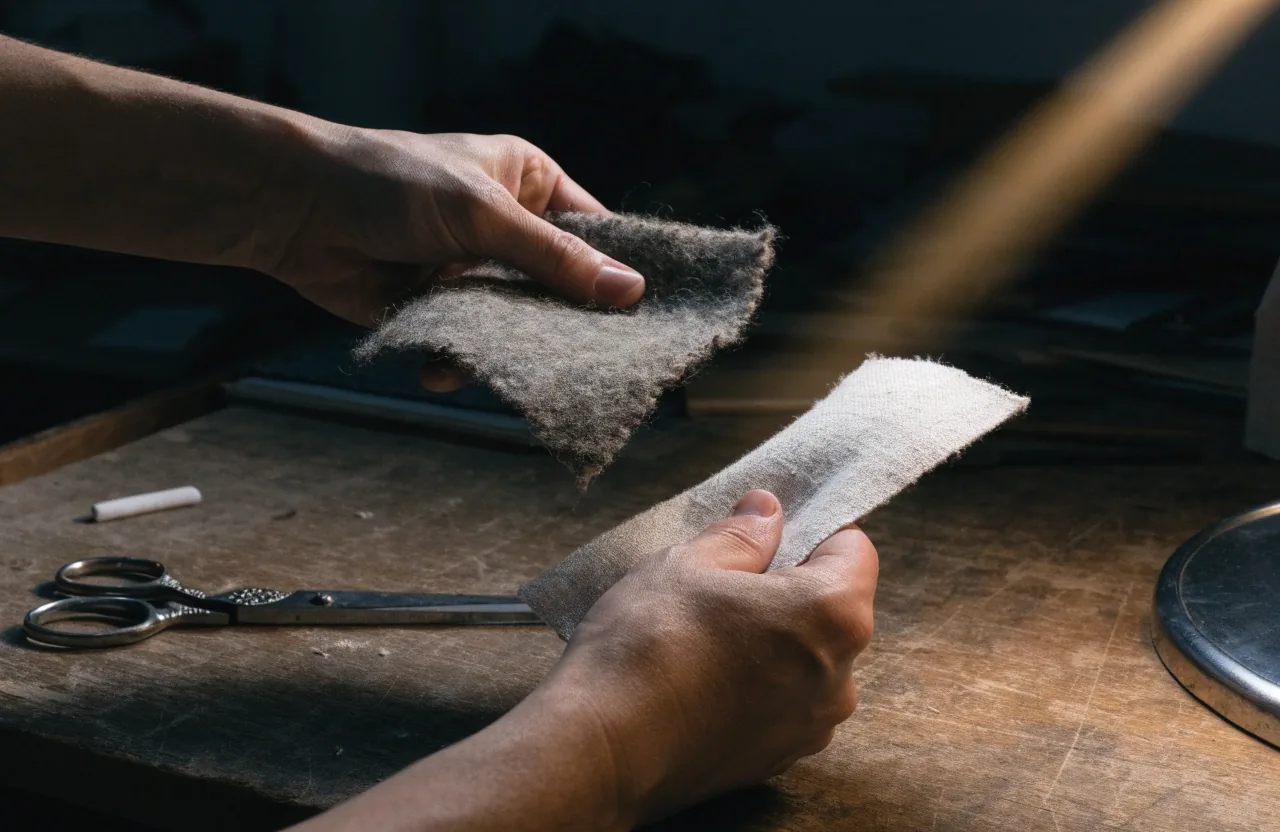
What to check: hold the fabric up and stretch it across the bias. Good cotton springs back; weak cotton stays bagged out.
Wool, warmth, and care
Wool regulates temperature well and resists odor, which is why it works across more seasons than people expect. The trade-off is care. Most wool garments need airing more than washing, and when they do need cleaning, cool water and flat drying preserve the fiber. Merino is finer and less itchy against skin; coarser wools are more durable and better suited to outer layers. Understanding that range helps you judge whether a knit will last or pill within a season.
What to check: rub the surface with your thumb. Loose fibers rising immediately are a sign the yarn is short and will pill.
Denim and how it ages
Denim is a twill weave, and its character comes from how the fabric is finished as much as from the cotton itself. Raw denim develops fades specific to the wearer; washed denim arrives soft and predictable. Neither approach is superior, but they demand different things: raw denim needs patience, washed denim needs nothing. What matters for fit is the weight and the small amount of stretch, if any. Heavier denim holds a silhouette; lighter denim with elastane moves more but loses shape faster.
What to check: pinch the denim between both hands and pull. If it barely gives, expect a break-in period and a longer life.
Construction details worth checking
Turn a garment inside out and you'll learn more than any product description will tell you. Seams, pattern alignment, buttons, and zippers are small things individually, but they add up to whether a garment survives a year or three.
Explore brand context-
Seam finishes
Finished, bound edges hold up better than raw ones. Look at the inside of a side seam before you look at the outside.
-
Pattern alignment
Check whether the stripes or checks line up at the side seams. When they do, the cutting was done with care.
-
Buttons and buttonholes
Buttons should be securely attached and sit flat. Buttonholes should be cleanly cut and consistent in size across the placket.
-
Zippers
Run the zipper the full length. It should move without catching and stay put when you stop pulling.
Fit is about seams, not sizes
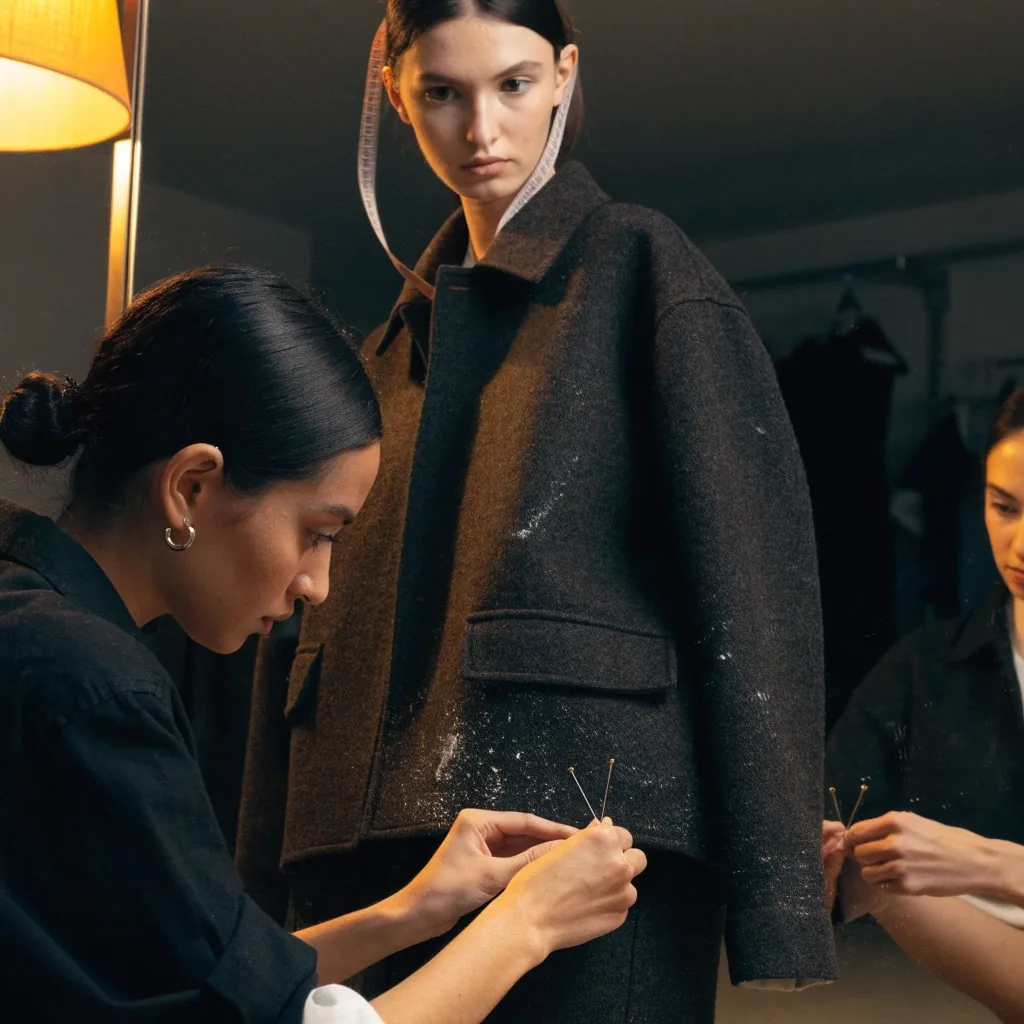
Sizing in the US varies enough between brands that the number is close to meaningless. What matters is where the seams land. If a garment fits at the shoulders, almost everything else can be adjusted by a tailor, which is often cheaper than buying a more expensive piece that fits.
Shoulder seam
Sits at the edge of the shoulder
Not past it, not short of it. This is the one measurement a tailor cannot easily fix, so it decides everything downstream.
Waistband
Stays put when you sit and stand
If it gaps at the back when you sit, the rise is wrong for you. Take the measurement before you take it to a tailor.
Sleeve length
Reaches the wrist bone for a classic fit
Slightly shorter reads modern; anything past the knuckle reads borrowed. Neither is wrong, but know which one you chose.
Torso drape
Falls clean from the shoulder
Creases radiating from the armpit or a pull across the chest mean the cut is fighting your frame, not fitting it.
Judging a garment in the store
You can evaluate a piece in about a minute. Feel the fabric and check whether it springs back when stretched. Hold it up to light to see how much it lets through. Look at the label for fiber content and origin. Check the seams inside. Ask what it will look like after twenty washes, not how it looks on the rack. That last question is the one most shoppers skip, and it's the one that predicts whether the purchase was worth it.
A minute spent this way replaces a lot of guessing. Bring the questions below with you on the next trip and the decision gets shorter, not longer.
Take these with you
- Does the fabric spring back when stretched?
- How much light comes through the weave?
- What is the fiber content and where was it made?
- Do the inside seams look finished or raw?
- What will this look like after twenty washes?
When to spend more
Price and quality correlate loosely, not tightly. Spending more makes sense when the extra money goes into material, construction, or fit that you'll notice over time: a wool coat, a well-cut blazer, a pair of boots you'll resole. It makes less sense on trend-driven pieces you'll wear for one season. A reasonable rule is to pay for what lasts and stay economical on what doesn't.
That rule also decides where a tailor earns their fee. Shoulders, a hem, and a waistband are worth altering. A garment that fights you at the chest usually is not.
Questions readers ask
Three that come up most often when people start reading labels.
Is natural fiber always better than synthetic?
No. Synthetics resist wrinkling and dry quickly, which is useful for travel. The choice depends on what you need the garment to do.
How can I tell if a garment is well made?
Check the seams inside, the fiber content on the label, and whether the fabric holds its shape when stretched. Those three things predict most of what matters.
Does a higher price mean better quality?
Not automatically. Price reflects brand positioning as much as material. Look at construction and fiber content instead.
L.01–04–09 · the index so far
This guide is the material half of the Kucul index. If it helped, the next stops are the styling chapters and the brand notes that explain where these fabrics come from and who still cuts them well.
452 W Broadway, New York, NY 10012 · Monday–Friday, 9:00 AM – 6:00 PM